Living in a Sedentary Society and What the Body Is Asking For
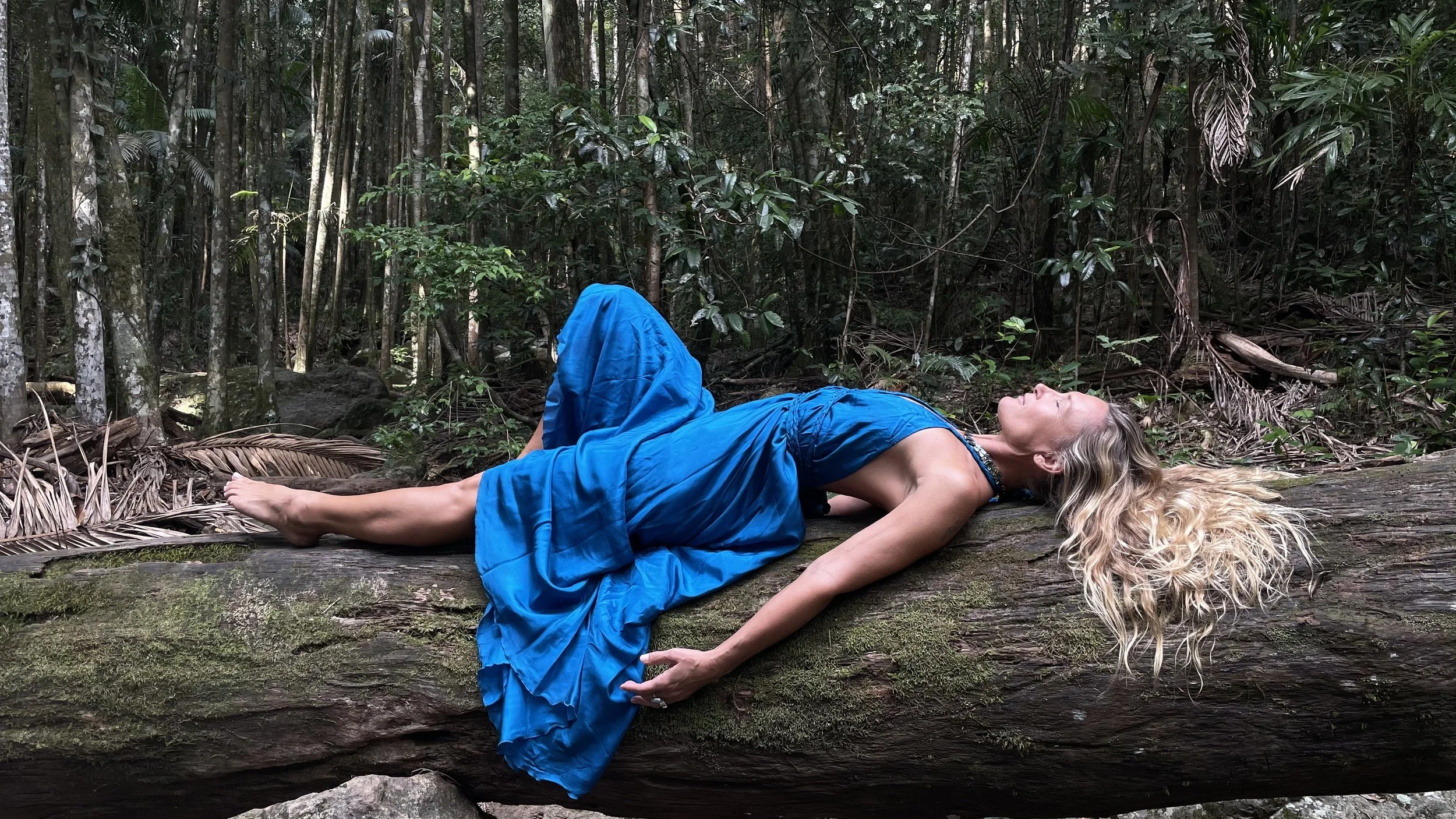
We live in a sedentary society.
Most of us sit far more than our bodies were ever designed to. We sit at desks, in cars, on couches, and in front of screens. Even when we move, we often do so with urgency, effort, or a sense of needing to “fix” ourselves.
I see the effects of this every day in my work offering Somatic Healing in Byron Bay and across the Northern Rivers. People arrive feeling tight, anxious, restless, fatigued, or disconnected from their bodies, often without a clear reason why. Many are doing “all the right things,” yet something still feels off.
From a somatic perspective, this makes complete sense.
A Sedentary Lifestyle Is a Nervous System Experience
A sedentary lifestyle doesn’t just affect muscles or joints. It shapes the nervous system.
When the body spends long periods sitting and under-moving:
Breathing becomes shallow and restricted
Fascia loses hydration and elasticity
Natural spinal movement is reduced
Sensory feedback from the body decreases
Over time, the nervous system adapts. It may stay slightly activated, vigilant, or braced, even when there is no immediate threat. This is often experienced as anxiety, chronic tension, disrupted sleep, digestive issues, or a constant sense of “holding it together.”
This is why nervous system regulation is at the heart of my work in Byron Bay and the Northern Rivers. Without it, no amount of stretching, strengthening, or positive thinking truly lands.
Why the Body Doesn’t Respond to Effort Anymore
Many people living in a sedentary society try to counterbalance it with more effort: harder workouts, deeper stretches, more discipline. Sometimes this helps, but often it doesn’t last.
That’s because much of what we experience as tightness or pain isn’t caused by short muscles. It’s caused by a nervous system that doesn’t feel safe enough to let go.
Fascia, the connective tissue that wraps and connects everything in the body, responds best to:
Slowness
Consistency
Gentle load
Awareness
This is where somatic movement for nervous system regulation becomes so valuable. Instead of overriding the body, we begin to listen to it.
Somatic Healing as a Response to Modern Life
Somatic Healing is not about correcting posture or achieving an ideal shape. It’s about restoring communication between the brain and the body.
In my work offering Somatic Healing in the Northern Rivers and Byron Bay, the focus is on:
Re-establishing safety in the nervous system
Supporting fascia to soften and rehydrate
Increasing interoception, the ability to feel from within
Allowing the body to self-organise rather than be forced
For many people, this feels very different from other approaches they’ve tried. It’s quieter. Slower. More subtle. And often, more sustainable.
This is why somatic work is increasingly recognised as one of the most effective somatic therapy alternatives for people who feel overwhelmed, burnt out, or chronically tense.
Yoga in a Sedentary Society Needs to Evolve
Yoga has always been about relationship with breath, with sensation, with awareness. Yet in a sedentary society, yoga can sometimes become another form of performance or productivity.
Embodied yoga in Byron Bay, as I teach it, is not about achieving shapes. It’s about restoring natural movement patterns that modern life suppresses:
Squatting
Spinal flexion and extension
Gentle rotation
Grounded, responsive breathing
This form of Yoga in Byron Bay, the Northern Rivers, and the Gold Coast supports the nervous system first. From there, mobility, strength, and ease emerge organically.
Yoga becomes a body-based healing practice, not a demand placed on the body.
Questions People Often Ask and What I’ve Observed
Can somatic healing help with stress and anxiety?
Yes. Stress is not just mental, it’s physiological. Somatic work supports the body in completing stress cycles rather than storing them.
Is somatic movement gentle enough if I feel sensitive or overwhelmed?
Often, sensitivity is a sign of a nervous system that has been working very hard. Somatic movement meets the body where it is, rather than asking it to push past its limits.
Why does slowing down feel uncomfortable at first?
In a sedentary society, many of us are disconnected from subtle sensation. Slowing down can initially reveal what has been held beneath the surface, and this is part of the healing process.
How is this different from massage or hands-on therapies?
Somatic healing empowers the body to participate in its own regulation. The changes tend to integrate more deeply because they arise from within.
What the Body Is Asking For
The challenges we face in a sedentary society are not personal shortcomings. They are intelligent responses to an environment that asks us to sit, hurry, and disconnect.
Through Somatic Healing in Byron Bay, embodied yoga, and nervous system-led movement, I see people reconnect with something very simple and very profound: the ability to feel at home in their bodies again.
Not by doing more, but by listening differently.